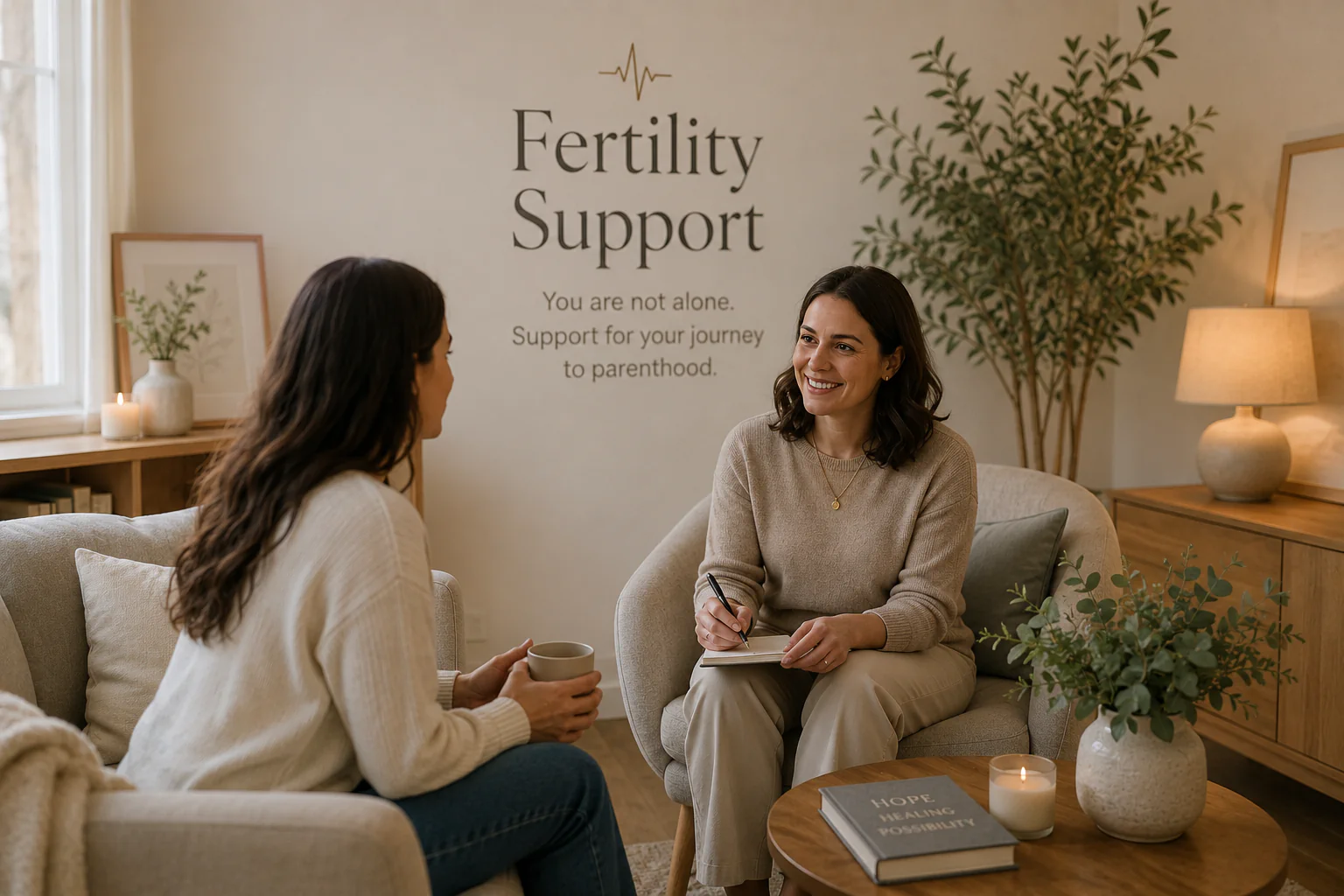
Individual Psychotherapy
Individual psychotherapy at Harmony & Pulse offers a supportive space to explore anxiety, emotional overwhelm, identity changes, relationship stress, and the psychological impact of reproductive and hormonal transitions.
Therapy is tailored to what you are navigating now, while recognizing that emotional wellbeing can be deeply connected to physical health, hormonal health, relationships, and nervous-system stress.
Individual psychotherapy is a confidential space where you can slow down, make sense of what you are experiencing, and explore the emotional patterns, pressures, and transitions affecting your wellbeing.
You may come to therapy with a clear concern, such as anxiety, fertility stress, postpartum overwhelm, or changes during perimenopause. Or you may simply know that something feels different and want a place to understand it more clearly.
The goal is not to tell you how you should feel. It is to help you develop greater self-understanding, emotional awareness, practical coping strategies, and a stronger sense of steadiness through change.
Understanding the pattern can change the conversation.
Worry, what-if thinking, difficulty switching off, or feeling constantly alert may be taking up more space in your life than you want.
Emotions may feel intense, unpredictable, exhausting, or difficult to manage alongside the demands of everyday life.
Fertility, pregnancy, parenthood, hormonal transitions, relationships, or changing life roles may be affecting how you see yourself.
You may be carrying visible or invisible losses, including fertility challenges, pregnancy loss, changing expectations, or a future that looks different from what you imagined.
Relationships, caregiving, expectations, communication, or difficulty setting boundaries may be contributing to emotional strain.
You may feel like you are functioning on the outside while internally feeling disconnected, depleted, or unsure of what you need.
OUR APPROACH
Our approach is collaborative, compassionate, and grounded in the belief that emotional experiences make more sense when they are understood in context.
Together, we may explore thoughts, emotions, relationships, patterns of coping, life experiences, and the way your nervous system responds to stress and change.
Therapy may include reflection, education, practical regulation strategies, communication skills, boundary work, and tools that help you respond to difficult moments with greater awareness and choice.
When physical, hormonal, reproductive, or other health concerns are part of your experience, psychotherapy is designed to work alongside — not replace — appropriate medical and allied-health care.
Better understand what you are feeling, what may be contributing to it, and what your emotions may be communicating.
Develop practical ways to recognize stress responses and support greater regulation during difficult or uncertain moments.
Explore what you need, where your limits are, and how to communicate those boundaries more clearly.
Understand recurring patterns in relationships and build more intentional ways of communicating and connecting.
Reduce harsh self-judgment and develop a more supportive relationship with yourself during periods of change or struggle.
Create space to think more clearly about decisions, priorities, relationships, and the direction you want to move in.
If something feels difficult, overwhelming, or simply different from how you want to feel, therapy can offer a place to begin understanding it.
COMMON QUESTIONS
Therapy can include anxiety, stress, relationships, identity, fertility concerns, pregnancy, postpartum adjustment, perimenopause, menopause, grief, boundaries, emotional overwhelm, or other experiences affecting your wellbeing.
You do not need to arrive with a perfectly defined problem or goal.

No. You do not need a mental health diagnosis or a crisis to begin psychotherapy.
Many people seek therapy because they want support through change, greater emotional clarity, healthier coping strategies, or a dedicated space to understand what they are experiencing.
The frequency of sessions can depend on your needs, goals, availability, and the type of support that feels most appropriate.
Session frequency can be discussed together and adjusted over time when needed.
Yes. Virtual psychotherapy is available to clients across Ontario, with in-person services available in Richmond Hill and North York.
Yes. Psychotherapy can support the emotional and psychological side of an experience while you continue to receive appropriate medical or allied-health care for physical, hormonal, or reproductive health needs.